


Preserving Halong Floating Legacy of Cua Van Cultural Center

Amidst the vast
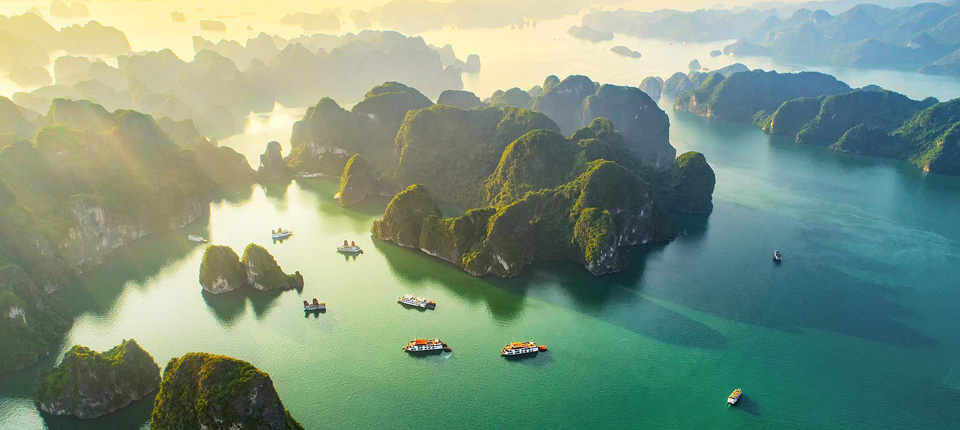
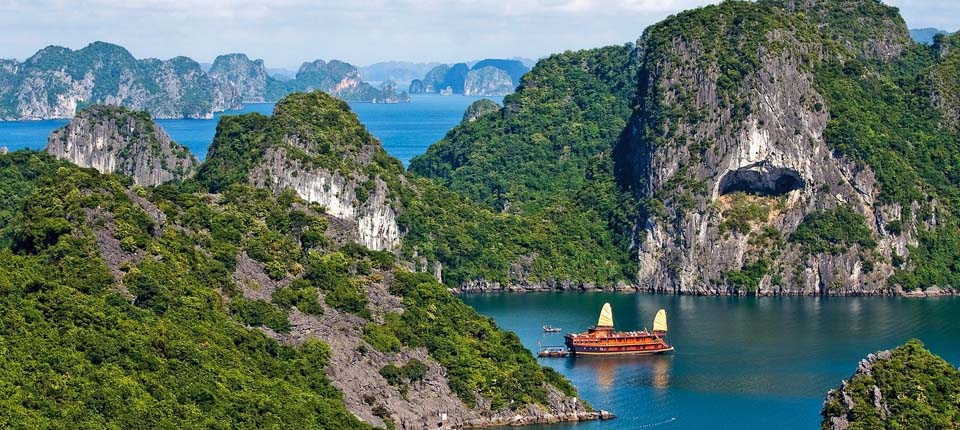
expanse of Halong Bay, the Cua Van Floating Cultural Center – a unique
aquatic "museum" – is receiving renewed attention following the recent
storms, opening up opportunities to continue and spread the distinctive
maritime cultural values of the heritage site -
Halong bay tour.
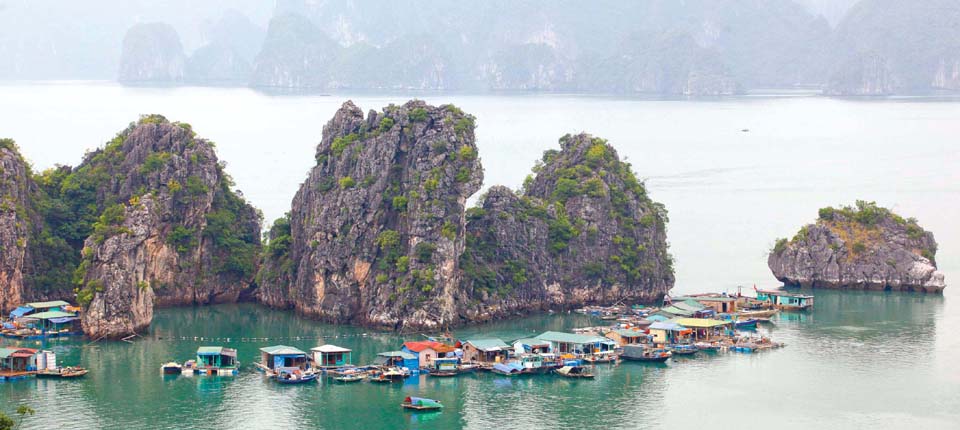
Located in Cua Van, one of the most representative fishing villages in
the bay, the Center serves as both an exhibition space and a repository
of centuries-old memories of the aquatic communities in Halong Bay.
According to research on aquatic culture, Cua Van was formed from the
settlement of many ancient fishing villages, most notably Giang Vong and
Truc Vong.
With the restoration of the Cua Van Floating Cultural Center, visitors
will have a unique destination within the heritage site of Halong Bay.
From around the 17th-18th centuries, fishermen from these villages
settled in Halong Bay, building floating houses and traveling by small
boats, forming a lifestyle closely connected to the sea. By the late
19th and early 20th centuries, residents of Giang Vong, Truc Vong, and
other nearby water-dwelling groups gradually converged on the Cua Van
area – a sheltered location ideal for anchoring boats – creating a
large, bustling fishing village that also became the cultural and social
center of the Halong Bay fishing community.
In that historical context, the Cua Van Floating Cultural Center was
inaugurated in 2006, within the framework of the Halong Ecological
Museum Project funded by the Norwegian Government. It became the first
floating cultural center in Vietnam for fishermen and a pioneering
ecological museum model connecting heritage with the original living
space. According to experts on sustainable tourism development from the
UNESCO World Heritage Center, this center not only displays artifacts
and tells the story of maritime culture in a vivid and profound way, but
also contributes to the development of the local community, raises
conservation awareness, and spreads indigenous values.
Accordingly, in nearly two decades of operation, the Center has affirmed
its special role in introducing the maritime culture of Halong Bay. Six
exhibition themes comprehensively reflect the material and spiritual
life of the aquatic inhabitants, from the natural environment,
livelihoods, folk knowledge to maritime beliefs and traditional love
songs and call-and-response songs. The floating space in the bay allows
visitors not only to "see" the culture, but also to "feel" it, through
direct experience with the landscape, people, and the rhythm of life
that once existed on the water. Therefore, the Center is considered a
"special museum," adding humanistic depth to the Halong Bay World
Natural Heritage site. It is also a learning and research destination
for many scientists and students, both domestic and international, when
studying aquatic culture, a unique form of habitation.
However, after nearly 20 years of operation in harsh marine conditions,
especially Typhoon Yagi in September 2024 with its strong winds and
large waves, the Center suffered serious damage, forcing all operations
to temporarily cease. This impact not only caused material losses but
also posed a risk of disrupting an important space of memory for the
fishing community's culture.
Given this situation, the renovation and upgrading project was proposed
by the managing agency and received attention from the Provincial
People's Committee and the Ministry of Culture, Sports and Tourism, the
Ministry assessed the necessity of the project, affirming that it is a
project of outstanding value in preserving and promoting cultural
heritage associated with the World Natural Heritage site. The Provincial
People's Committee has directed specialized agencies to research and
propose a project for the renovation, repair, and upgrading of the
Center.
Cua Van is both a vibrant living museum and a place that recreates many
beautiful and unique cultural features of the coastal inhabitants.
The project is expected to be implemented in 2026. The center will be
relocated ashore for repairs, then returned to its original location in
the bay, ensuring structural safety, landscape harmony, and minimizing
the impact on the heritage environment. More importantly, after its
restoration, the center will not only be upgraded technically but also
repositioned to serve as a space showcasing the unique maritime and
island culture, while also becoming a highlight for heritage education
and sustainable cultural tourism.
From ruins after Typhoon Yagi, the revival of the Cua Van Floating
Cultural Center is not just about repairing a structure, but about
affirming the commitment to preserving and continuing the aquatic
culture of Halong Bay as a vibrant part of today's heritage.
Source:
https://halong-tour.com/travelnews/halong-bay-restoring-cua-van-floating-cultural-center.php

